
There are fields where we must invest a great deal of time and effort to reach a level of excellence. Medicine, construction, and software architecture are just a few examples of disciplines that demand deep knowledge and dedication, given their constant challenges and the need to stay current with the latest trends and technological advances.
Throughout our lives, we choose not to pursue certain kinds of knowledge in areas that require extensive experience, because the time and cost of mastering them would far exceed the cost of consulting an expert.
A working year has roughly 48 weeks. On average, we take one week of sick leave, excluding chronic illnesses. If we divide that week by the total number of working weeks, we get the equivalent of 2%.

Statista 2017
When you get sick, do you grab a medical textbook to learn about your illness and start reading it? No, right? It wouldn't make sense: the frequency is extremely low (2% per year) and the specialization barrier is high enough that the best option is to see a doctor. Now, if you were sick 80% of the time, you would surely dedicate a considerable amount of time to learning about your condition, treatments, and options, to the point of being able to discuss them with a doctor. What changed? The degree of investment.
The same thing happens when you have a problem with your kitchen sink: it isn't worth learning how to fix it if it happens less than 2% of the time.
If you only dedicate 2% of your time to learning about complex topics, you will never be good at them.
Architecture design and the 2%
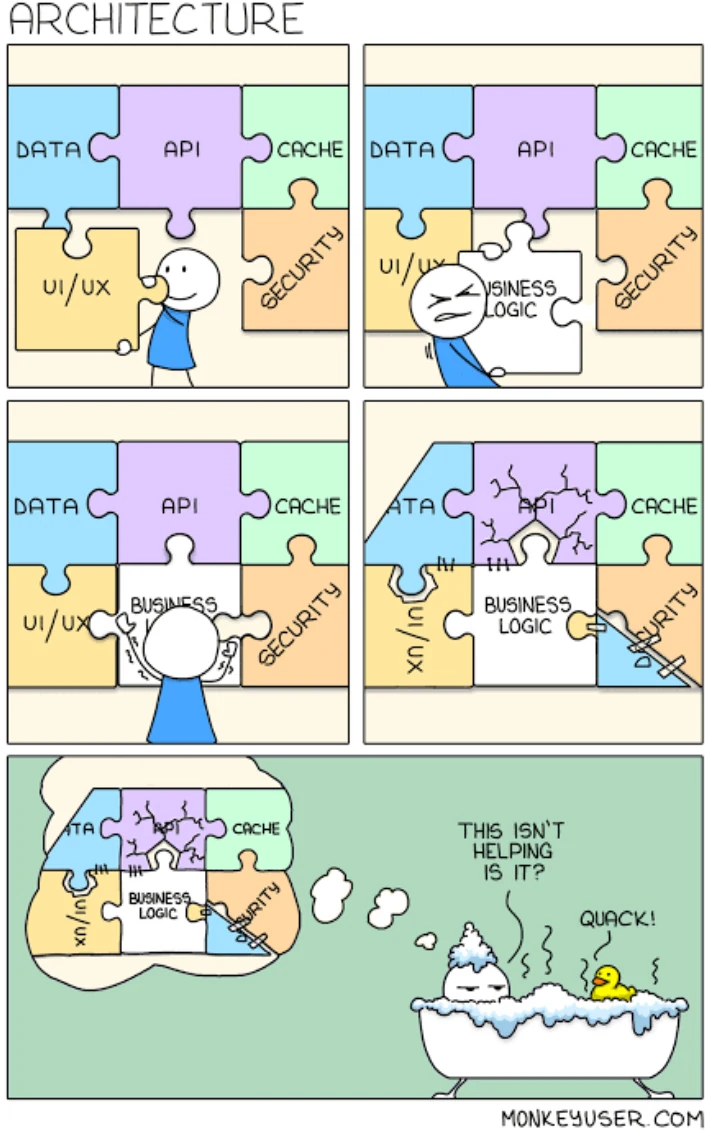
The moments when software architecture gets designed usually happen at the start of each project (and also in January of each year). This means that before a project can begin development, its architecture must first be laid out.
How long do teams take to design the architecture? A week? Two weeks? A month? There really is no answer, and it doesn't matter: in the end, all activities are planned in cycles (measured in weeks or months) at a week-to-year ratio of 1:50, which once again gives us 2%.
Software architects have learned the hard way, and have refined the idea that you need to specialize and become a reference in order to be ready for that 2% window of time and design the best solution for the system.
Conclusion
The 2% problem refers to the limited amount of time we can dedicate to complex topics because of how infrequently they occur. In fields like medicine and software architecture, it is essential to rely on specialized experts who can deliver efficient, high-quality solutions during those critical moments. It is therefore important to recognize the value of software architecture and the need to invest in specialized knowledge and skills to ensure the success of our projects.